Can you have a tummy tuck after a C-section?
Many patients consider a tummy tuck after C-section because pregnancy and caesarean delivery can leave loose skin, a lower-abdominal shelf, a scar that feels tethered or changes in the abdominal wall. A tummy tuck may be an option for some people, but a C-section alone does not determine whether surgery is appropriate. The surgeon needs to assess your skin, scar, muscles, health, weight stability, future pregnancy plans and recovery support.
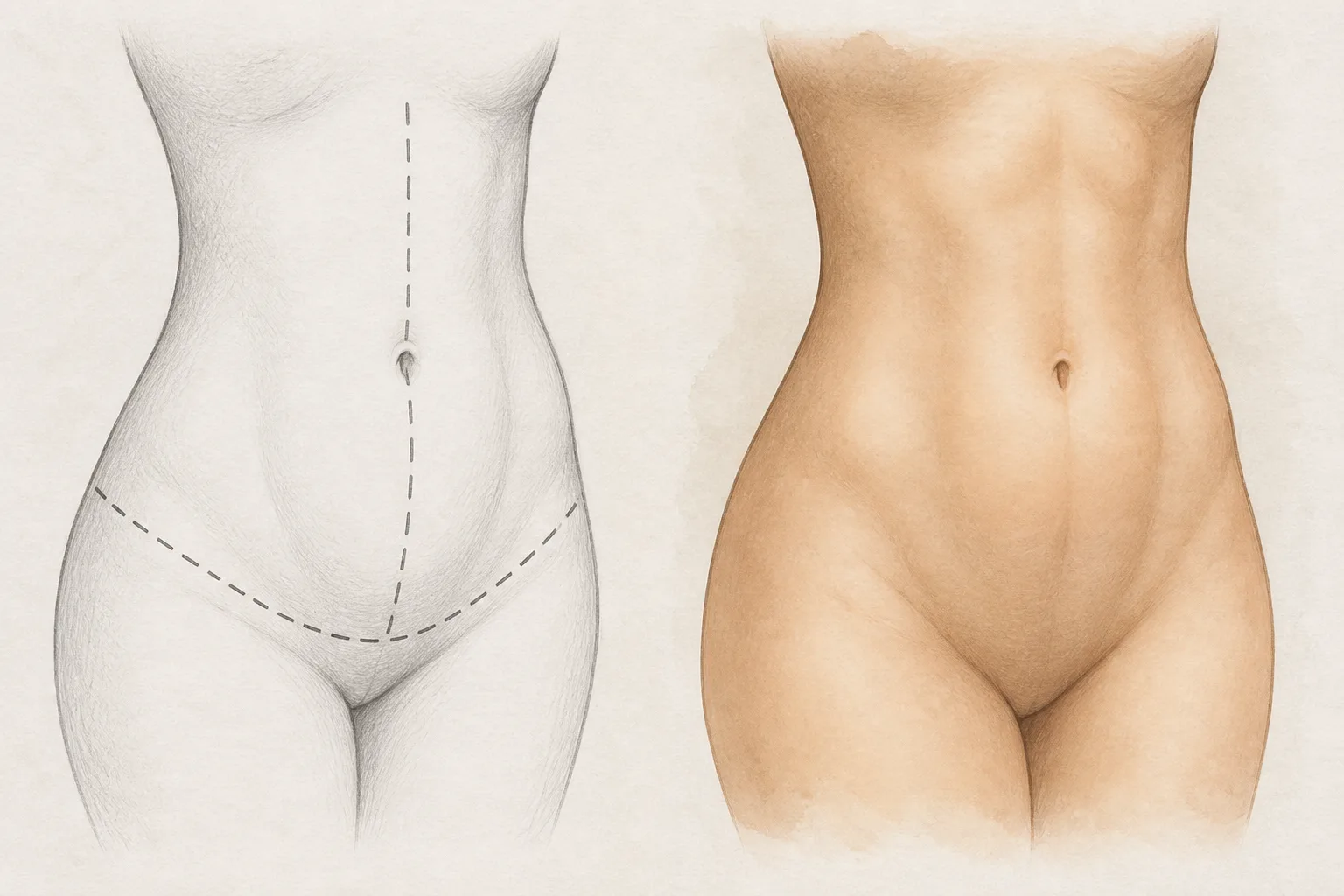
Abdominoplasty is not simply a way to erase a C-section scar. The operation may remove a section of lower-abdominal skin, release or incorporate an old scar and, when indicated, address muscle laxity. It also creates a new scar and involves a substantial recovery. The aim is to improve the overall abdominal contour safely, not to promise that every mark or symptom will disappear.
How the old C-section scar may affect the plan
A low transverse scar may sit within the skin that is removed during a tummy tuck, but this cannot be guaranteed from a photograph. The scar may be higher, uneven, wide, painful, tethered or associated with a bulge. Previous vertical incisions, infection, poor healing or several abdominal operations can change the blood supply and the surgical design.
Ask the surgeon to examine the scar and explain what is likely to happen. It may be removed with the excess skin, incorporated into the new incision or remain partly visible. Scar quality varies by person, and the new tummy-tuck scar can become raised, darker, wider or numb before it matures. A history of keloids or difficult scars should be discussed before booking.
Pregnancy can change the muscles and skin
Pregnancy stretches the abdominal wall and can contribute to diastasis recti. Some patients notice a midline bulge, core weakness or a change in the way the abdomen feels. The surgeon may assess for muscle separation and a hernia, but not every bulge is caused by diastasis and not every symptom is solved by cosmetic surgery.
If muscle repair is recommended, ask what will be repaired, what recovery restrictions apply and whether physiotherapy is part of the plan. A repair may improve support and contour in selected patients, but it does not guarantee the resolution of back pain or a permanently flat abdomen. Medical assessment is important if there is pain, a growing bulge or digestive symptoms.
Timing after childbirth, breastfeeding and a C-section
The body needs time to recover from pregnancy, childbirth and breastfeeding before an elective abdominal operation is planned. Your weight, breast changes, nutrition, sleep, anaemia, pelvic-floor recovery and general health should be considered. The right timing is individual, and a surgeon may recommend waiting until your weight is stable and you have finished breastfeeding or reached a settled post-pregnancy baseline.
Tell the team when the C-section took place, whether there were complications, whether you are breastfeeding and whether you take medication. A previous wound infection, blood clot, anaesthetic problem or delayed healing is relevant. Do not assume that a certain number of months automatically makes surgery safe for you.
Separate appearance concerns from symptoms
A shelf above a C-section scar, numbness around the incision or a feeling that the skin is tethered may be part of the reason you are seeking advice. However, persistent pain, a firm lump, a changing bulge, discharge or symptoms that worsen with movement deserve medical assessment before an elective cosmetic plan. A tummy tuck can improve selected contour and scar problems, but it should not be used to bypass investigation of a hernia, scar complication or another pelvic or abdominal condition.
Bring a clear history of what you notice: when it began, whether it changes when you stand or cough, whether it affects exercise and whether the skin has broken down. This helps the surgeon decide whether the concern is primarily loose skin, scar tethering, muscle separation, fat distribution or something that needs another specialist. The more specific the assessment, the less likely the operation is to be planned from a generic package description.
What if you may want another baby?
A future pregnancy can stretch the abdominal skin and muscles again and may change or reduce the durability of the result. Some patients choose to wait until they have completed planned pregnancies. Others decide to proceed after discussing the trade-off with their surgeon. There is no useful consultation without an honest conversation about your plans.
If another pregnancy is possible, ask whether the operation should be postponed, what could change and whether a future C-section would affect the repaired abdominal wall or scar. The decision should be based on your priorities and medical advice, not on pressure to book while a promotion or travel date is available.
Recovery when you have children at home
Recovery after abdominoplasty can make lifting, bending, getting up from a low seat and standing upright difficult at first. This is especially important for parents of babies and young children. Arrange another adult to help with lifting, bathing, car seats, meals and night-time care. You may be able to be present with your child without being able to carry them safely.
Plan the home environment before surgery: keep essentials within reach, prepare meals, organise transport and arrange help with school or nursery. International patients should include a realistic stay in Turkey, an in-person review before flying home and support after landing. A hotel room and a return ticket are not a substitute for practical care.
Questions to ask at your consultation
- Can you examine my C-section scar and explain where the new scar would sit?
- Is there evidence of diastasis recti, a hernia or another abdominal problem?
- Would muscle repair be recommended, and what would it change?
- How would another pregnancy affect the result?
- Should I wait until my weight, breastfeeding and nutrition are stable?
- How long will I need help with lifting and childcare?
- What scar-care and follow-up plan will I need after returning home?
A tummy tuck after C-section can be a carefully considered option, but the consultation should be about anatomy and timing rather than simply removing an old line. Bring your surgical history, medication list, pregnancy plans and questions. A clear plan should explain both the potential improvement and the new scar, recovery and risks you will accept.
For related reading, see the guide to tummy tuck muscle repair and diastasis recti and the tummy tuck scar-care guide. General information cannot replace examination by the surgeon planning your treatment.