What people mean by tummy tuck muscle repair
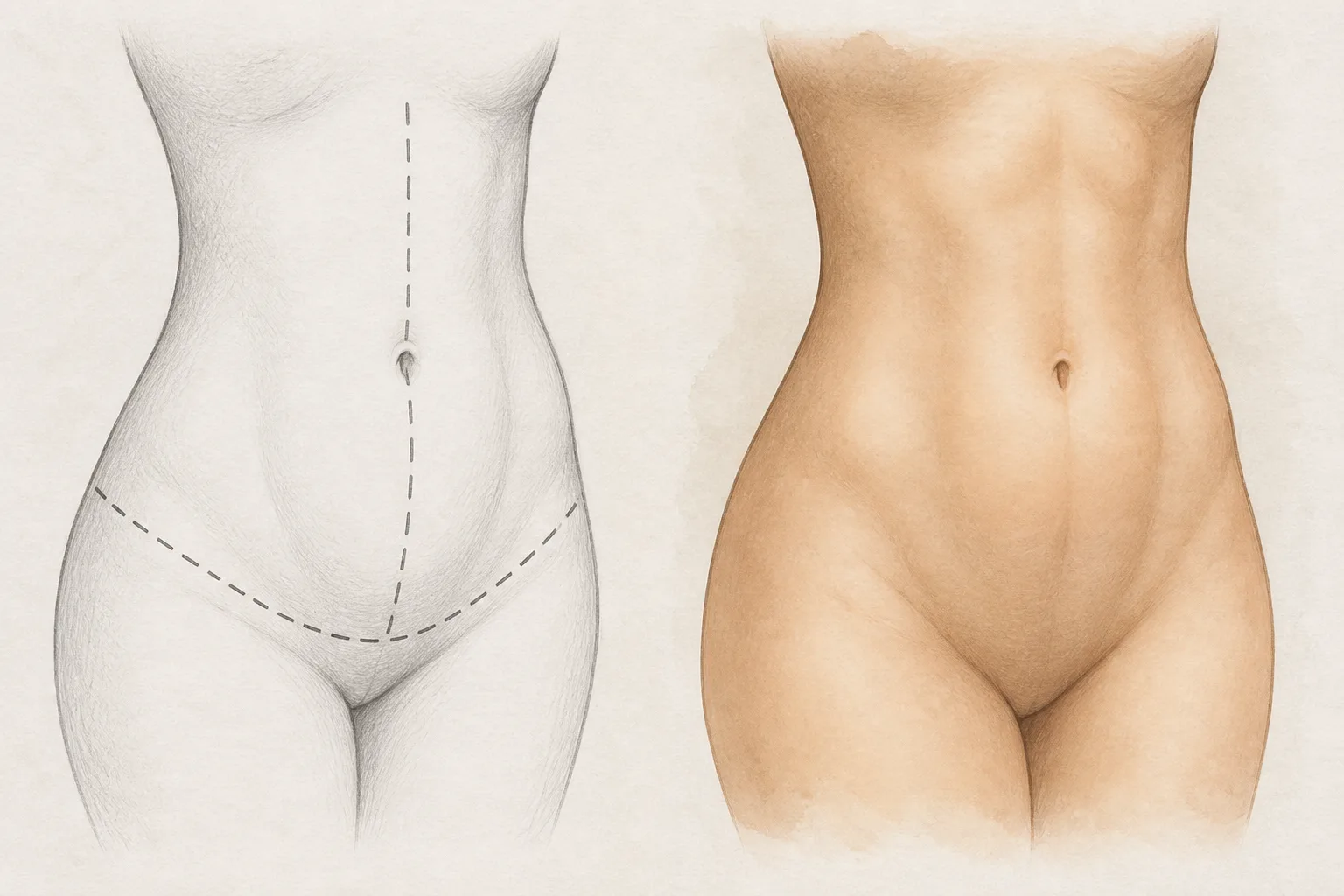
Tummy tuck muscle repair is usually discussed when the abdominal wall has become lax or the central tissues between the rectus muscles have widened. Patients often call this diastasis recti or abdominal separation. A tummy tuck is not simply a skin-removal procedure: in selected patients, the surgeon may tighten or repair the abdominal wall as part of the operation. Whether that is appropriate depends on examination, symptoms, anatomy and the overall surgical plan.
Diastasis recti is common after pregnancy, but it is not automatically a reason to have surgery. A gap or bulge should be assessed rather than diagnosed from a social-media test. Physiotherapy may be useful, especially when the main problem is weakness, poor pressure control or movement discomfort. If surgery is being considered, the consultation should explain what muscle repair could improve, what it cannot guarantee and how it changes recovery.
What is diastasis recti?
The abdominal muscles are connected at the midline by a band of connective tissue. With pregnancy, major weight changes or repeated strain, that tissue can stretch and the muscles may sit farther apart. Some people notice a ridge or doming when they sit up, a soft midline, core weakness, back discomfort or difficulty controlling pressure. Others have a separation without meaningful symptoms.
The width of a gap is only part of the picture. Tissue quality, the tension of the abdominal wall, the location of the separation, a possible hernia and your symptoms all matter. A clinician may examine you standing and lying down and may assess for a hernia or other cause of a bulge. Do not assume that every abdominal prominence is diastasis recti or that every separation needs an operation.
What a surgeon assesses before recommending repair
- Where the laxity or separation is located and how it behaves with movement.
- Whether there is excess skin, a lower-abdominal overhang or stretch-marked skin that also affects the plan.
- Whether a hernia, scar tissue or another abdominal condition needs separate assessment.
- Your weight stability, general health, nicotine use, medication and previous operations.
- Whether you have completed planned pregnancies or may want another pregnancy.
- How much recovery time, lifting restriction and practical support you can arrange.
A surgeon may recommend a full tummy tuck, a different approach, physiotherapy first, a staged operation or no surgery. The word “repair” should not be used as a sales promise. Ask what technique is proposed and why it fits your findings.
What muscle repair may change
When appropriate, repairing the abdominal wall can make the central contour firmer and may improve the feeling of abdominal support. It can be relevant when loose skin and muscle laxity occur together, particularly after pregnancy or major weight loss. The aim is a better abdominal wall and contour, not a guarantee of stronger athletic performance or the removal of every symptom.
Muscle repair does not replace core rehabilitation, correct every cause of back pain or make future weight changes irrelevant. It does not guarantee that the abdomen will look completely flat in every position. Internal healing, skin elasticity, scar behaviour and your starting anatomy influence the outcome. A careful consultation should separate aesthetic goals from symptoms that need medical diagnosis.
What should happen before the operation?
Before agreeing to surgery, the team should review your medical history, previous abdominal operations, medications, nicotine use, pregnancies and any symptoms that could point to a hernia or another condition. Share whether the bulge changes with coughing, whether you have pain and whether daily lifting or exercise makes it worse. The surgeon may also discuss photographs, examination findings or additional assessment when the diagnosis is uncertain.
This conversation should include the limits of repair. Ask whether the proposed operation is intended mainly to remove skin, improve contour, address a functional concern or combine several goals. You should understand the incision, possible drains, expected posture, restrictions and follow-up before paying a deposit. A clear plan makes it easier to compare medical advice and recognise when a generic package description does not reflect your anatomy.
How recovery can differ from skin-only surgery
Muscle repair can contribute to a feeling of tightness, pulling or restricted movement in the early weeks. Standing fully upright may take time, and coughing, getting out of bed, using the toilet and caring for children can feel more demanding. Your surgeon may give specific instructions about posture, walking, lifting, driving and returning to work.
Early walking is commonly encouraged when safe, but walking is not the same as exercising the abdominal wall. Do not test the repair with sit-ups, heavy lifting, planks or intense gym work because you feel better. The timing for progressive activity is individual and should be based on the operation and examination. A physiotherapist may help you rebuild movement and pressure control once the surgeon allows it.
Contact the clinical team for increasing pain, a new or enlarging bulge, wound separation, fever, spreading redness, heavy bleeding or rapidly worsening swelling. Sudden breathlessness, chest pain, fainting or new one-sided leg swelling needs urgent local medical assessment.
Pregnancy and future plans
Pregnancy can stretch the abdominal wall again and may change the skin and contour after a repair. If you are considering another pregnancy, tell the surgeon before planning surgery. Some patients choose to wait until their family is complete so the result is less likely to be altered by a future pregnancy. This is a timing conversation, not a judgement about your choices.
The same principle applies to substantial planned weight loss. A stable, sustainable starting point generally makes it easier to plan the operation and interpret the result. If your weight is changing quickly, ask whether waiting or another treatment sequence is safer.
Questions for a diastasis recti consultation
- Do I have diastasis recti, a hernia or another cause of the bulge?
- What examination or imaging is needed before deciding?
- Why would muscle repair help me, and what would it not correct?
- Will the plan include skin removal, liposuction or another procedure?
- How will repair affect posture, lifting, work and exercise during recovery?
- What support will I need at home after travelling back?
- How would a future pregnancy or weight change affect the result?
Patients comparing options can review the tummy tuck operation page for a general procedure overview, but the decision about muscle repair belongs in an individual consultation. A trustworthy plan explains the anatomy first and the treatment second.
For background, the Cleveland Clinic diastasis recti guidance explains why examination and non-surgical care may be relevant. The ASPS recovery guidance also highlights the need for operation-specific instructions.