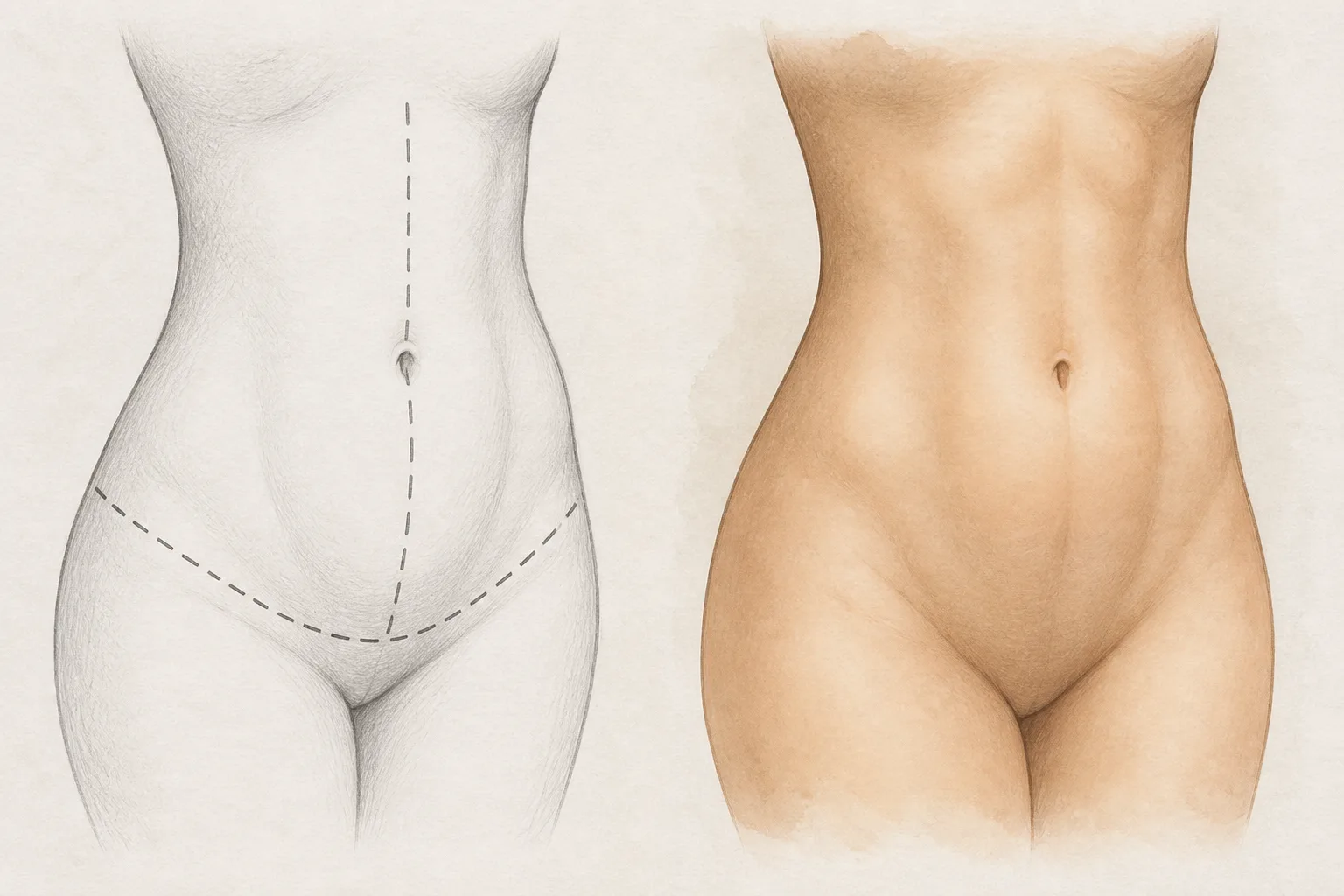
Scar care begins with protecting the wound
Tummy tuck scar care is not a single cream or a quick treatment. It begins with protecting the incision while it is still a surgical wound, then moves to a longer period of helping the scar mature. In the first days, the priorities are clean dressings, prescribed medication, sensible movement, good nutrition and following the operating team’s instructions. Do not treat a fresh or open incision with silicone, massage, oils or a cosmetic product unless your clinician specifically tells you to.
After abdominoplasty, the lower-abdominal incision may be red, firm, itchy or uneven before it becomes a mature scar. A full tummy tuck may also leave a scar around the navel. The final appearance is influenced by incision tension, skin type, smoking, infection, healing biology and time. This guide complements the tummy tuck in Turkey operation page and does not replace an examination.
Understand the stages of tummy tuck scar healing
Stage 1: the incision is still vulnerable
During the early phase, the edges are healing and may be covered by dressings, tape, glue or another closure. Swelling and bruising can make the line look irregular. Keep the area protected, avoid pulling or stretching the abdomen and follow the instructions for bathing and changing dressings. The fact that a wound looks dry does not automatically mean it is ready for products or vigorous activity.
Stage 2: the scar becomes more visible
As the incision closes, the scar may become pink, red, darker, firm or slightly raised. This can be a normal part of remodelling, but a sudden change is different from a stable healing pattern. Ask your surgeon when you can start silicone or massage and whether any part of the incision is still too fragile.
Stage 3: gradual maturation
Scars usually soften and fade slowly. The NHS notes that raised scars after tummy tuck surgery may take 12 to 18 months to fade, and individual scars can continue changing for longer. Do not judge the final line in the first few weeks or compare it with a filtered photograph. A scar can improve substantially without disappearing completely.
Silicone: ask when and how to use it
Silicone sheets or gels are commonly discussed for surgical scars, but timing matters. They are generally considered only after the incision has fully closed and the treating clinician confirms that the skin can tolerate them. A product placed on an open, weeping or infected area can irritate the wound or hide a change that should be examined.
Ask whether a sheet or gel is more practical for your scar, how long it should stay in place, how the skin should be cleaned and what to do if a rash develops. More product is not automatically more effective. Stop and contact the team if you develop blistering, increasing redness, drainage or worsening pain.
Sun protection protects the appearance of the scar
New scars can react to ultraviolet exposure and become darker or more noticeable. Keep the incision covered from direct sun and ask when sunscreen is appropriate. Do not apply sunscreen to an open wound. Once the skin has healed enough for it, use the product and level of protection recommended by your clinician and continue covering the scar when practical.
This matters especially for international patients returning from Turkey to a sunny climate or planning a beach holiday soon after surgery. Swimming, sunbathing and prolonged heat are not part of early recovery. The tummy tuck recovery guide explains why the first weeks should be organised around healing rather than tourism.
Reduce avoidable tension on the incision
Abdominal skin is under tension when you stand suddenly, stretch, lift, cough or exercise too soon. Follow your surgeon’s instructions about posture, walking, lifting, core exercise and sleep position. A compression garment or abdominal binder may be prescribed, but it should support the area without creating a pressure point or making breathing difficult.
Do not use a garment to override pain or activity restrictions. If it rolls into the incision, causes numbness, creates a blister or feels too tight, ask for a fit check. Avoid heavy lifting, including children and suitcases, until you have been cleared. Tension from ordinary life is one reason support at home is part of scar planning.
Smoking, nutrition and health conditions
Nicotine reduces blood flow and can interfere with wound healing. Tell the surgical team about cigarettes, vaping, nicotine replacement and other nicotine products. Do not assume that switching products makes the issue irrelevant. Your surgeon may require a nicotine-free period before and after surgery.
Eat regularly, follow medical advice and tell the team if you have diabetes, poor circulation, a history of thick scars or a condition that affects healing. Protein and hydration support the body, but supplements should be checked for interactions. Scar care cannot compensate for an untreated infection, uncontrolled condition or continued nicotine exposure.
Keloids, hypertrophic scars and scar changes
Some people form scars that are thicker, wider or more raised than expected. A personal or family history of keloids should be disclosed before surgery. A hypertrophic scar may stay within the original incision while a keloid can extend beyond it; only a clinician can assess what is happening.
Early review is useful if a scar becomes increasingly raised, painful, itchy or extends beyond the expected line. Treatments may include silicone, injections, pressure, laser or revision in selected cases, but the timing and choice must be individualised. Do not buy an aggressive home device or steroid product without medical advice.
Warning signs are not ordinary scar maturation
Contact the clinic promptly for spreading redness, warmth, worsening pain, fever, foul-smelling drainage, wound separation, bleeding or rapidly increasing swelling. Chest pain, breathlessness, fainting or new one-sided calf symptoms require urgent medical assessment. A scar question should not delay care for a possible infection or clot.
Questions to ask about your scar plan
- Where will the incision sit, and how long is it expected to be?
- When is the wound considered closed enough for silicone or massage?
- How should I protect the scar from sun?
- Which movements, lifting and exercises create too much tension at this stage?
- What history of keloids or poor healing should I tell you?
- Which changes require a photograph, a routine review or urgent care?
For independent background, read the NHS tummy tuck information and the ASPS discussion of tummy tuck scars. Good scar care is patient, protective and guided by the clinician who can see how your incision is healing.