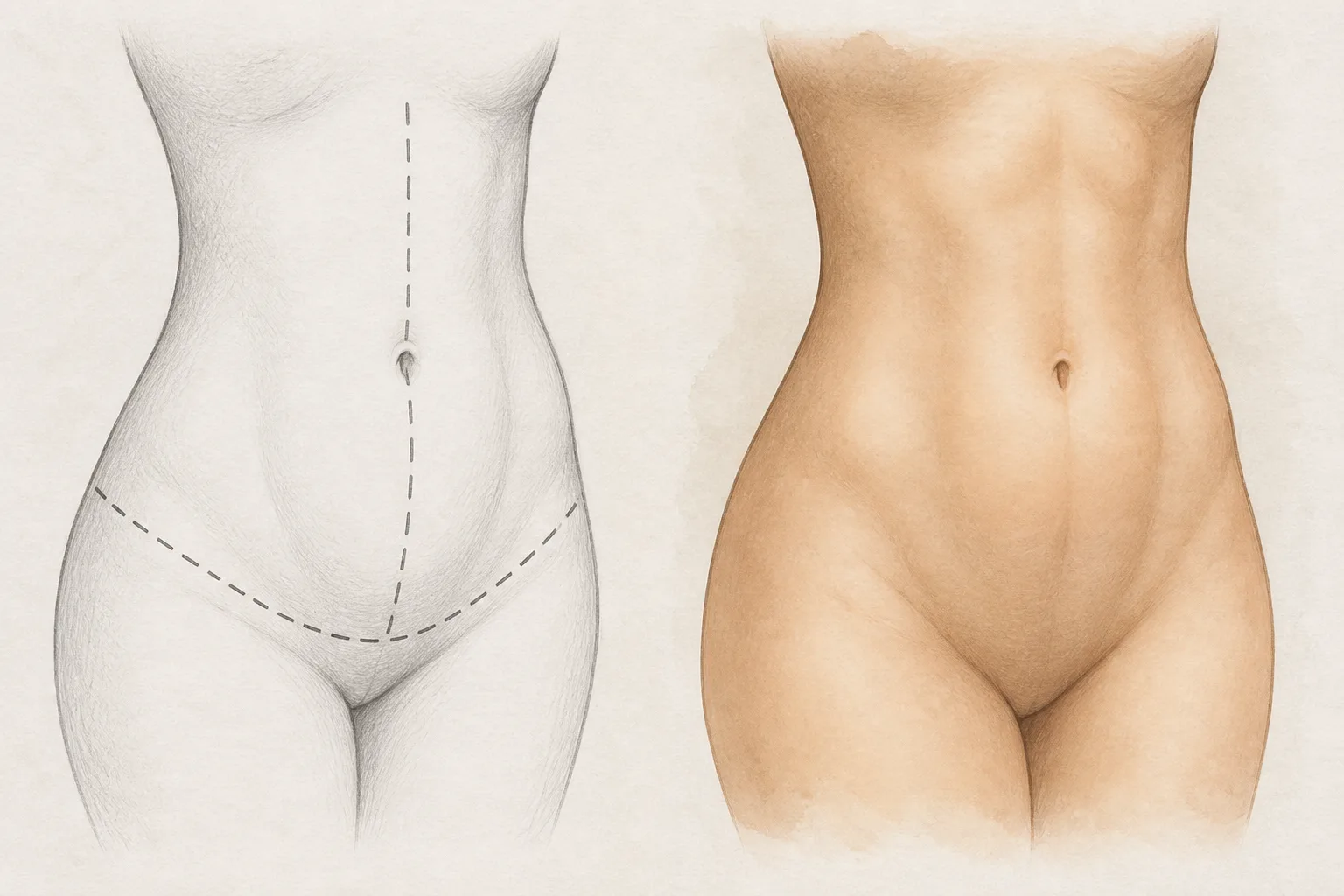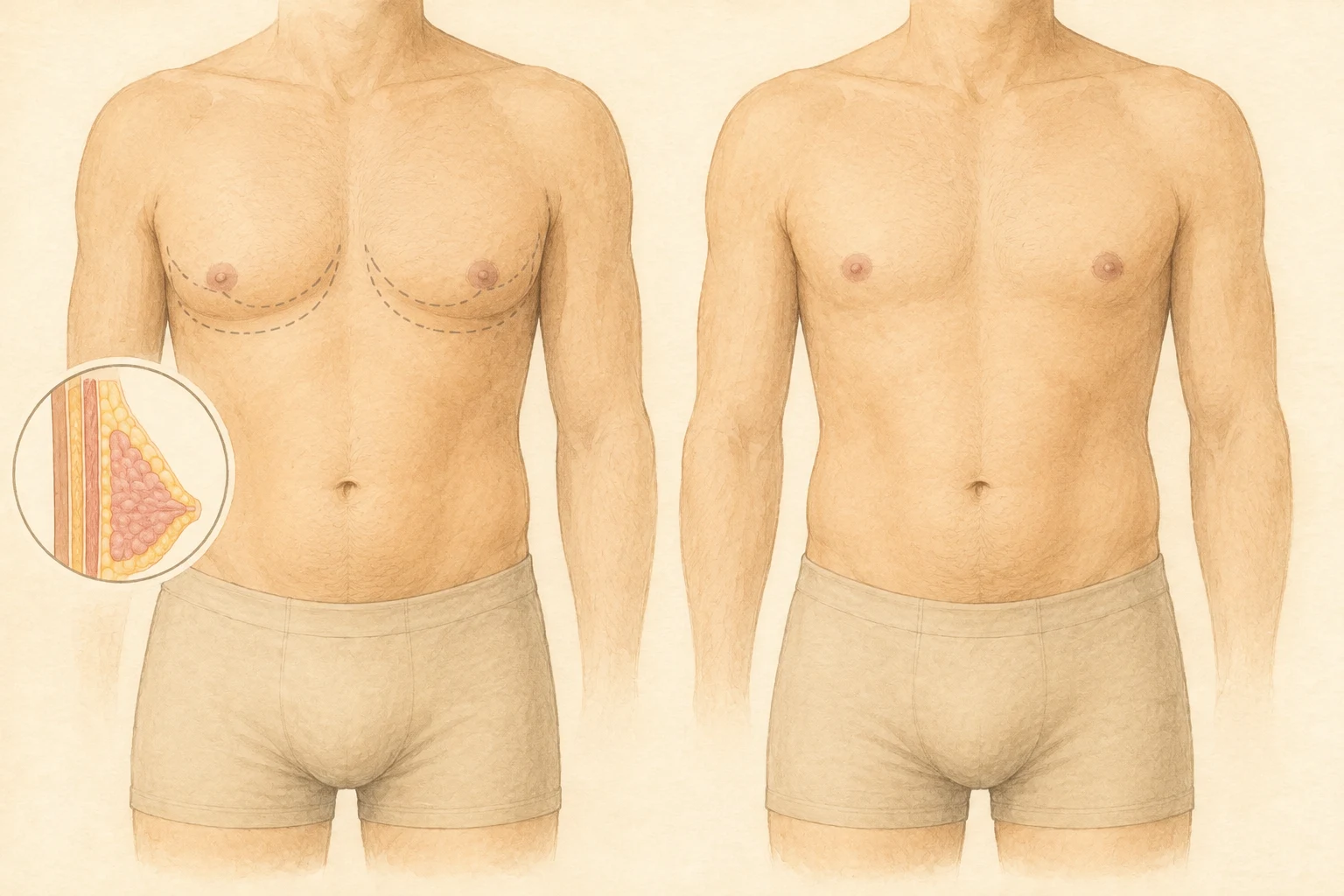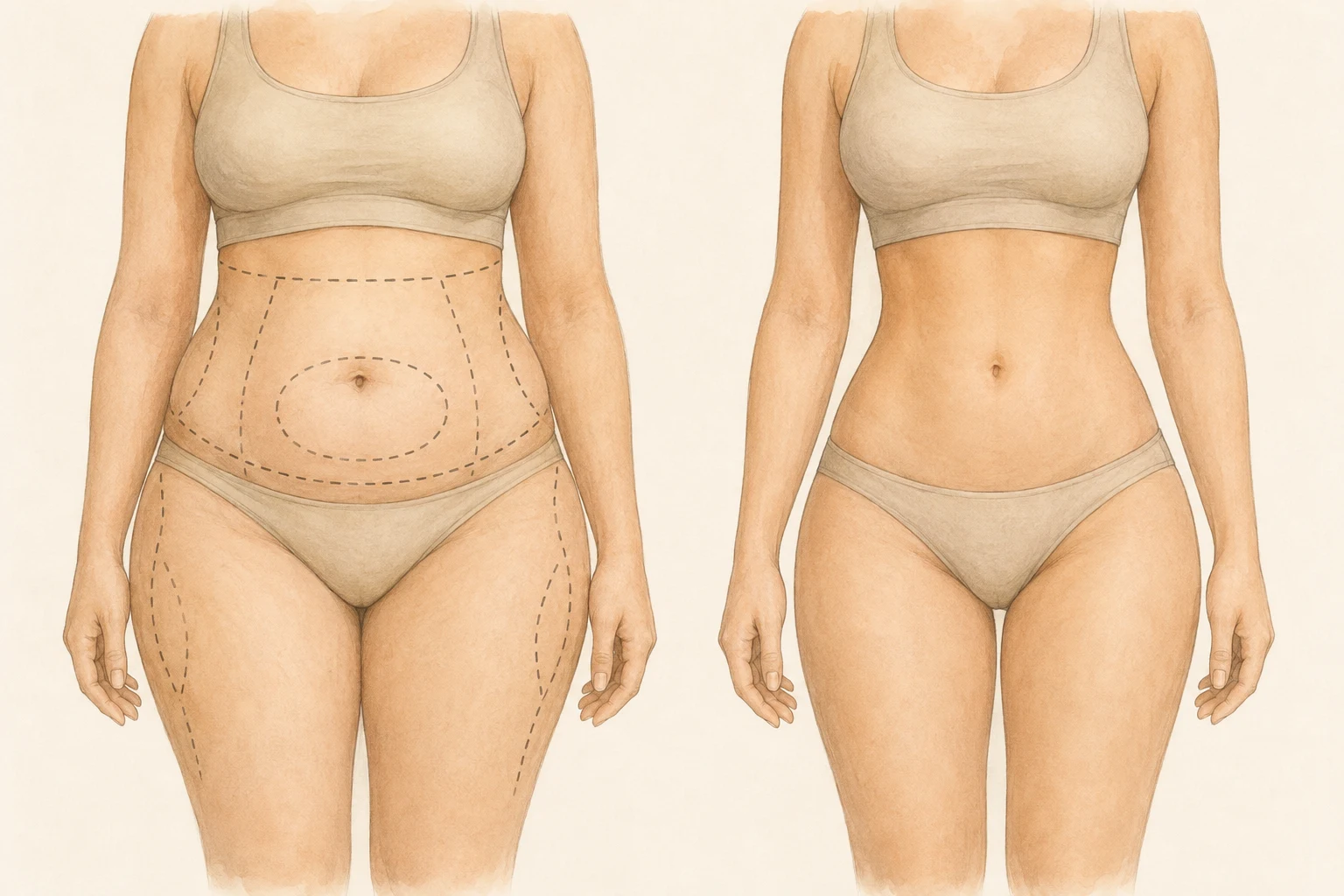
Good consultation photos help, but they do not replace an examination
Body contouring consultation photos can help a surgeon understand your starting point before an online appointment. Clear images may show the distribution of loose skin, scars, asymmetry, folds and localised fat. They are useful for deciding what questions to ask and whether an in-person assessment is needed. They cannot measure muscle separation, diagnose a hernia, assess every medical risk or guarantee a surgical plan.
If you are sending tummy tuck consultation photos, combine them with your height, weight, weight trend, goals, pregnancy history, previous operations and medical information. A photograph without context can be misleading. The more honest and complete the submission, the less likely the consultation is to become a generic package conversation.
Use a consistent set of views
Unless the clinic provides a different format, take relaxed standing photographs from the front, both sides and the back. Keep the camera level with the area being assessed and stand far enough away that the body is not distorted by a wide-angle lens. Use the same distance, room and lighting for each view. If the concern is limited to the abdomen, include the full torso so the surgeon can see proportion and posture.
Do not suck in your stomach, flex, push the skin down or pose to make the contour look better. If a bulge changes when you relax, cough or move, describe that in writing rather than trying to create several dramatic poses. A surgeon may ask for additional views, but begin with images that represent your ordinary standing posture.
Lighting and image quality
Use even, natural or bright indirect light. Avoid strong backlighting, deep shadows, filters and beauty modes. The image should be sharp enough to show the skin surface and scars without revealing more detail than necessary. Do not send screenshots from social media, edited before-and-after comparisons or photographs taken through a mirror when a direct image is possible.
Keep the original files when practical and follow the clinic’s secure upload process. Messaging apps can compress images or create privacy concerns. Ask who can access the images, how long they are retained, whether they are used for teaching or marketing and how you can request deletion. Do not send intimate photographs through an unverified personal account.
Clothing, privacy and consent
Wear simple, close-fitting underwear or the level of coverage requested by the clinical team, while keeping your privacy and comfort in mind. You do not need to expose areas unrelated to the consultation. Remove jewellery or objects that obscure the contour. If a scar or skin fold is important, make sure it is visible without including identifying documents, faces, children or a recognisable home background.
If someone else takes the photographs, make sure you are comfortable with the process and know where the images will go. Ask for the clinic’s privacy policy before sending. Never assume that a coordinator’s request automatically means the image is stored securely. You can ask whether the images are encrypted, who sees them and whether marketing consent is separate from clinical consent.
Include the information a photo cannot show
- Age, height, current weight and how long your weight has been stable.
- Pregnancy, birth, breastfeeding and future pregnancy plans.
- Previous abdominal, breast, liposuction or other body-contouring operations.
- Medical conditions, allergies, medications, supplements and nicotine use.
- History of blood clots, anaesthetic problems, difficult healing or raised scars.
- Your main concern, what you have tried and what outcome would feel realistic.
- Where you live, your proposed travel dates and the support available at home.
Tell the team if the area is painful, changing, associated with a lump, wound, discharge or functional problem. A cosmetic photograph should not be used to conceal a symptom that needs medical assessment. If you have a new or rapidly changing bulge, seek appropriate medical advice rather than waiting for a sales-led consultation.
Ask for a real consultation
An online photo review should lead to questions, not an instant promise. Ask to speak with the surgeon who would perform the procedure and confirm whether the recommendation is preliminary. A responsible consultation discusses alternatives, limitations, risks, likely scars, recovery, follow-up and the possibility that the surgeon may recommend no surgery or a different operation after examination.
Be cautious if a clinic gives a final plan from one edited photograph, promises a fixed result without asking about health, refuses to discuss risks or pressures you to pay before speaking with the surgeon. Photos can help start a conversation, but they cannot justify skipping medical history, examination or time to decide.
Use the photo review to compare care, not just a quote
After the review, ask for a written summary of the provisional recommendation and the information still needed before surgery. Compare who will examine you, where the procedure takes place, how follow-up works and what happens if the proposed operation changes. A second qualified opinion is reasonable when the recommendations differ or when a large combined procedure is suggested from limited information.
Keep a copy of what you sent and the answers you received. Clear records help you notice when a later quote, surgeon or procedure differs from the original discussion. Do not feel obliged to book simply because you shared personal images.
Questions to ask before sending images
- Which views and level of clothing do you need?
- How will the images be uploaded and protected?
- Who will see them, how long will they be stored and can I request deletion?
- Will the surgeon review them, or only a coordinator?
- What medical information should accompany the photographs?
- Will I need an in-person examination before a final recommendation?
- Are clinical consent and marketing consent kept separate?
Good photos make an online conversation clearer, but good questions make it safer. Use consistent images, disclose the full medical context and keep your expectations realistic. You can also review the tummy tuck decision guide and the tummy tuck operation page before sending a consultation request.
For international patients, the body-contouring abroad red-flags guide explains why surgeon access, privacy and aftercare matter as much as the first photo review.