The right question is usually weight stability, not a magic number
Patients searching for the ideal weight before tummy tuck often expect one BMI or scale number to decide whether surgery is appropriate. In reality, timing is more individual. A surgeon considers whether your weight is stable, whether you are still losing or gaining, how much loose skin is present, your health and nutrition, your planned result and whether another pregnancy or major weight change is likely.
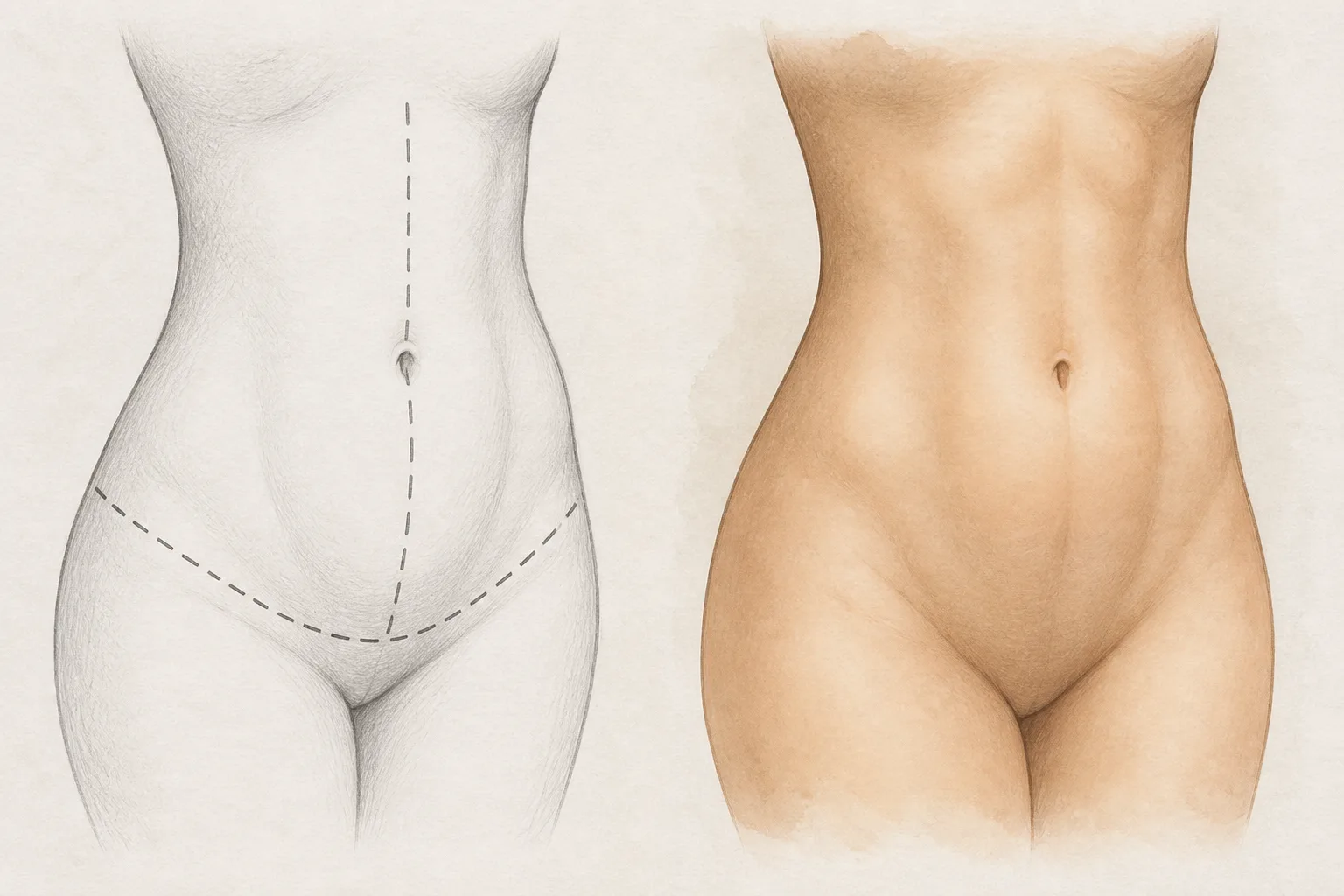
A tummy tuck can remove excess skin and may address abdominal-wall laxity, but it is not a weight-loss operation. If weight is still changing, the body shape after surgery may change too. A consultation should therefore ask not only “what do I weigh?” but also “where is my weight heading, how long has it been stable and can I maintain this range?”
Why stable weight can improve the plan
When weight is reasonably stable, the surgeon can assess the distribution of skin and fat more accurately and design the operation around a more predictable starting point. Significant weight loss after abdominoplasty may leave additional loose skin or alter the contour that was created. Significant gain can stretch the remaining skin and abdominal wall, add fat and change the result.
Stable weight does not mean a patient must have a perfect body or reach an arbitrary target. It means the surgical plan is not being used as the next step in an unfinished weight-loss programme. The Cleveland Clinic notes that the long-term contour is more durable when weight remains stable. Your surgeon should interpret that principle in the context of your health rather than promise permanence.
When waiting may be sensible
You are actively losing weight
If you are losing weight quickly, discuss whether to complete the planned loss first. Operating too early may mean removing skin that would otherwise change again and may lead to a second procedure. The safest timing can depend on how the weight loss was achieved, your energy levels, blood tests, nutritional status and how long maintenance has been established.
You recently had bariatric surgery
After bariatric surgery, the body may need time to settle into a stable range and recover from nutritional deficiencies. Protein, iron, vitamin levels, wound healing and the ability to maintain intake all matter before elective body-contouring surgery. Do not assume that a calendar interval alone means you are ready. Bring your bariatric history, recent blood results, supplements and weight trend to the consultation.
You expect another pregnancy
Pregnancy can change the abdominal skin, muscles and weight again. If another pregnancy is likely, ask how it could affect the result and whether waiting would make sense. A future pregnancy does not make a tummy tuck morally or medically impossible for every person, but it is important to make the timing choice with clear expectations.
Your health or nutrition needs optimisation
Being at a certain weight does not guarantee surgical readiness. Smoking, poorly controlled diabetes, anaemia, untreated sleep apnoea, medication issues or inadequate nutrition may deserve attention before an elective operation. Tell the surgeon about weight-loss injections, supplements, eating difficulties and previous complications. Do not stop prescribed medication without medical advice.
What if your BMI is higher or lower than expected?
BMI is one screening measure, not a complete description of your body or risk. A higher BMI may be associated with wound, clotting, anaesthetic or healing concerns, while a very low weight can coexist with poor nutrition or limited tissue reserve. The surgeon may recommend weight reduction, medical optimisation, additional tests, a different operation or postponement.
Ask for a clear explanation of the recommendation. A responsible team should discuss risks without shaming you and should not pressure you to change weight rapidly for a booking deadline. Extreme dieting before surgery can reduce strength and nutrition. Sustainable habits, appropriate protein and guidance from your doctor or dietitian are more useful than a short-term crash plan.
How to document your weight trend
Bring a simple record of your weight over several months, the date of any bariatric procedure, your current exercise and nutrition pattern and the goals you still want to achieve. Include pregnancy and breastfeeding history, previous abdominal surgery, medications and medical conditions. Photos can help show changes in loose skin, but they do not replace examination.
If the plan includes liposuction, ask how fat distribution, skin elasticity and weight changes affect the proposed contour. Liposuction is not a solution for general weight loss, and removing more tissue is not always safer or more effective. The operation should be designed around your anatomy and health.
Make the timing practical, not just numerical
Look at the reason behind your target weight and the life changes around it. A new job, intensive training programme, fertility treatment, medication change or planned move can all affect whether you can recover calmly. The best date is one that leaves room for pre-operative tests, nutrition support, help at home and follow-up rather than one that is simply the first available slot after a scale milestone.
If your weight has plateaued but your health is still improving, ask whether the surgeon wants more time or a medical review. If your weight fluctuates within a small, sustainable range, explain that pattern rather than trying to force one “perfect” morning measurement. Written documentation of your trend helps the consultation focus on risk and expectations instead of a single number.
Questions to ask before booking
- Has my weight been stable long enough for you to plan surgery?
- Would further weight loss change the operation or the likely result?
- Do I need nutritional blood tests or medical optimisation?
- How would a previous bariatric operation affect healing and supplements?
- What weight changes after surgery could alter the contour?
- Should I wait until after a planned pregnancy?
- What is the safest plan if you believe I am not ready yet?
Good timing protects the value of a tummy tuck. It allows the surgeon to see the problem more clearly, reduces the chance that ongoing weight change will undo the contour and gives you time to prepare for recovery. The goal is not to meet a marketing number; it is to reach a stable, medically appropriate starting point with realistic expectations.
You can also read the guide to deciding whether a tummy tuck is right for you and the Cleveland Clinic tummy tuck overview. Your surgeon and personal doctor should make the final timing decision together with you.