Start with the problem you want to solve
If you are researching a tummy tuck in Turkey, the first question should not be how quickly you can book or how much a package costs. It should be whether abdominoplasty addresses the change that bothers you. A tummy tuck can remove excess abdominal skin, improve a stretched lower abdomen and, when appropriate, repair weakened or separated abdominal muscles. It is major surgery, not a weight-loss treatment and not a substitute for a careful medical assessment.
Choosing abdominoplasty in Turkey can be reasonable for some international patients, but the decision needs two parts: deciding whether the operation fits your body and goals, and deciding whether the surgeon, hospital and aftercare plan are trustworthy. The related tummy tuck in Turkey operation page explains the treatment pathway. This guide helps you think through suitability before you request a final plan.
What a tummy tuck can address
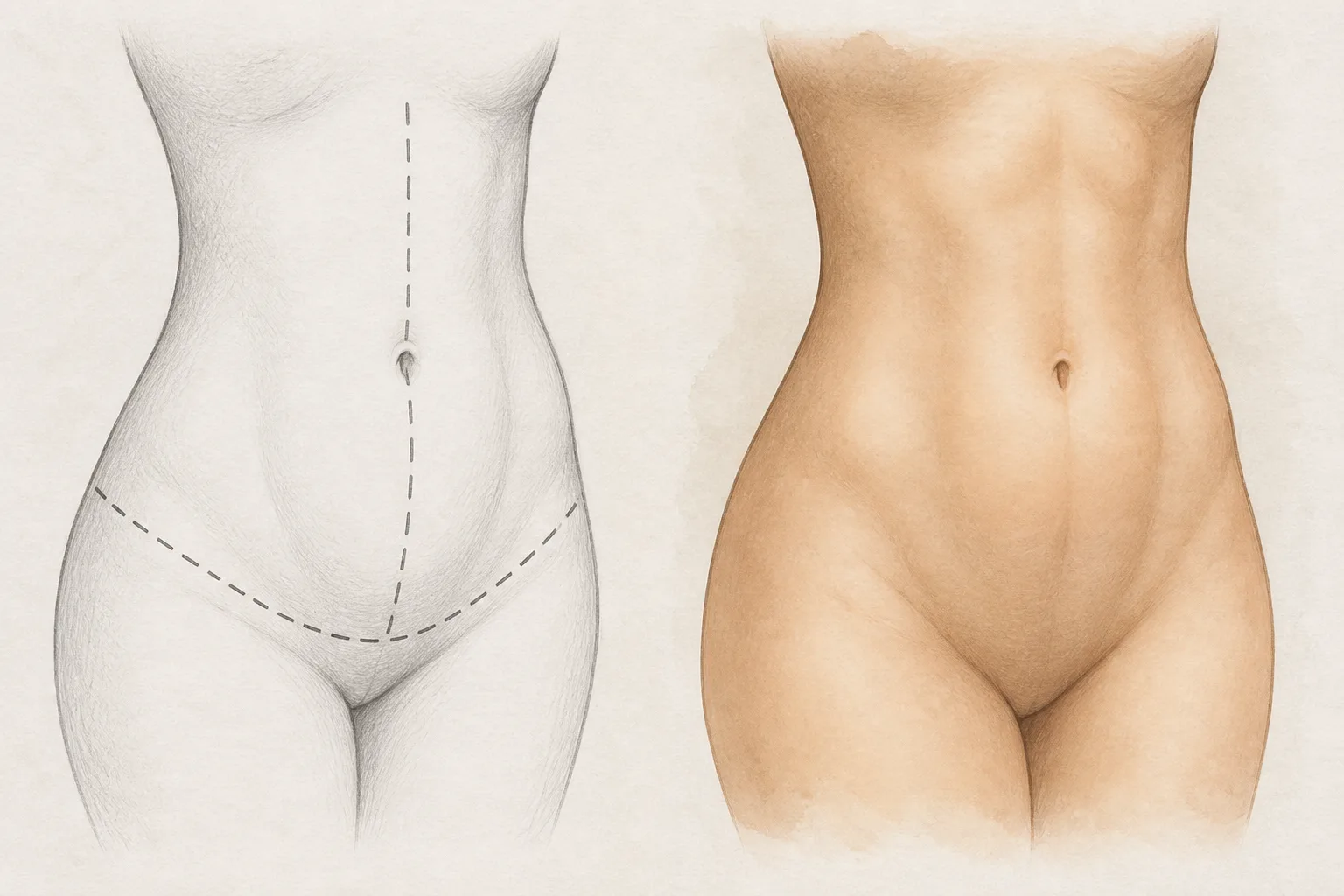
Abdominoplasty is usually considered when the abdomen has loose skin that does not improve with weight loss or exercise. Pregnancy, substantial weight loss, ageing and previous surgery can leave an apron-like fold, stretched skin or a lower-abdominal overhang. A tummy tuck may also address abdominal wall laxity or diastasis recti when the surgeon believes muscle repair is appropriate.
The operation can improve the contour of the abdominal wall, but it does not promise a perfectly flat stomach or remove every stretch mark. Stretch marks located in the skin that is removed may be reduced, while marks above the planned excision may remain. The final result is influenced by skin quality, weight stability, scars, healing and the limits of your anatomy.
Signs that you may be worth assessing
You have a stable, realistic starting point
A stable weight is generally more helpful than chasing a particular number on the scale. Major weight loss after surgery can create new loose skin, while significant weight gain can change the contour. If you are still actively losing weight, ask whether it would be better to reach a sustainable range and maintain it before surgery.
Loose skin, rather than fat alone, is the main concern
Liposuction removes selected fat but does not remove a hanging layer of skin. If your main concern is a small, pinchable fat deposit with good skin elasticity, liposuction may belong in the discussion. If skin hangs, folds or has lost its ability to retract, a skin-removal operation may be more relevant. Sometimes a surgeon discusses a combination or a staged plan; sometimes the safest answer is to do less.
You understand the scar and recovery trade-off
A tummy tuck creates a lower-abdominal scar, and a full procedure may also involve a scar around the navel. The scar is planned as low as practical, but its length, thickness and final colour vary. Recovery can include swelling, tightness, altered sensation, difficulty standing fully upright and temporary restrictions on lifting. If you are not prepared to accept a scar or arrange help at home, the timing may not be right.
You can plan time, support and follow-up
International patients need more than a hotel reservation. You may need help with transfers, medication, meals, bathing, luggage and childcare. Your schedule should include an in-person review before flying home, a flexible departure plan and a clear way to contact the clinical team after you leave Turkey. A short holiday itinerary is not a recovery plan.
When it may be better to wait
Future pregnancy plans deserve an honest conversation. Pregnancy can stretch the abdominal skin and muscles again, so some patients prefer to postpone a tummy tuck until they have completed planned pregnancies. This is not an absolute rule for every person, but it matters when judging the likely durability of the result.
Active smoking, poorly controlled diabetes, significant untreated medical problems, unstable weight or unrealistic expectations can increase concern. Do not hide medication, nicotine use, previous operations, blood-clot history or symptoms because you fear being declined. The surgeon needs the complete picture to decide whether to proceed, optimise your health, change the plan or recommend waiting.
A new painful bulge, unexplained abdominal symptom or possible hernia should be medically assessed rather than treated as a cosmetic issue. Cosmetic surgery should not replace diagnosis. Ask which examinations or tests are needed before an elective operation.
Mini, full or extended: the name follows the anatomy
A mini tummy tuck is generally limited to the area below the navel and may suit carefully selected patients with lower-abdominal laxity. A full tummy tuck addresses the upper and lower abdomen and commonly involves a new opening for the navel. An extended tummy tuck may be considered when excess skin continues around the flanks. These are not interchangeable package labels.
The right choice depends on the location of excess skin, muscle laxity, previous scars, skin quality and the result you want. A smaller operation is not automatically a better operation if it leaves the main concern untreated. Likewise, a larger operation is not automatically justified. Ask the surgeon to explain what each option would change and what it would leave behind.
How to assess a tummy tuck in Turkey
- Confirm the name, training and relevant experience of the surgeon who will operate.
- Ask to speak directly with that surgeon before paying a deposit or booking travel.
- Identify the hospital or accredited facility, anaesthesia team and post-operative monitoring arrangements.
- Request a written plan that names the procedure, possible muscle repair, drains, garments, follow-up and travel clearance process.
- Ask what happens if you need an extra night, an additional wound review or treatment after returning home.
- Keep the operation report, medication list, discharge instructions and emergency contact details.
Travel is part of the medical decision
Air travel and major surgery can increase blood-clot risk. The NHS advises patients travelling abroad for cosmetic surgery to plan aftercare carefully, rest after surgery and avoid treating the trip as a holiday. Your return flight should follow an in-person review of mobility, pain control, wounds, swelling and general condition, not a generic promise made before surgery.
Arrange airport assistance and do not plan to lift a suitcase. Keep medical documents and medication in your hand luggage. At home, know where urgent care is available and how the Turkish team will respond if you develop a concern. You can also review the related tummy tuck recovery guide before setting dates.
Questions that reveal whether the plan is individual
- What specific tissue problem are you treating in my case?
- Why do you recommend a mini, full or extended tummy tuck?
- Will muscle repair be needed, and how will that change recovery?
- What result is realistic if I have previous scars, stretch marks or loose skin above the navel?
- How many reviews occur before I travel home?
- What would make you postpone, reduce or decline the operation?
What a responsible decision looks like
You do not need to decide because a coordinator says a date is available. A good decision leaves room to compare the surgeon’s assessment, the facility, the written aftercare plan, the scar trade-off, your support at home and the possibility that treatment should be staged or delayed. The NHS tummy tuck guidance describes abdominoplasty as major surgery with risks to consider, while the ASPS recovery guidance highlights the importance of individual instructions for wounds, drains, garments and activity.
If the operation fits your anatomy, health, timeline and expectations, a detailed consultation can move the decision forward. If it does not, being told to wait or choose another approach is useful clinical advice. The goal is not simply to have surgery in Turkey; it is to make an informed decision with a realistic plan for the months after it.