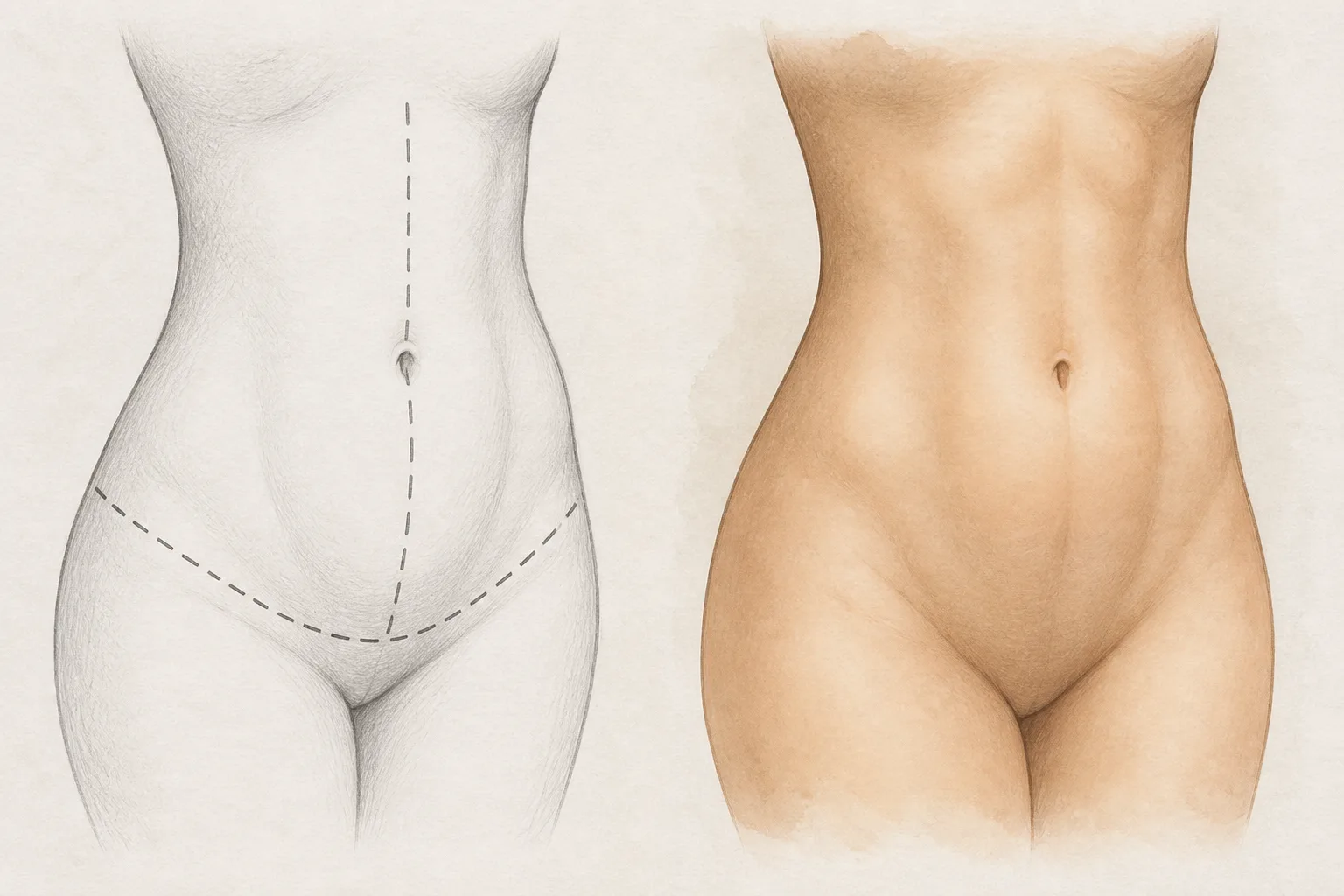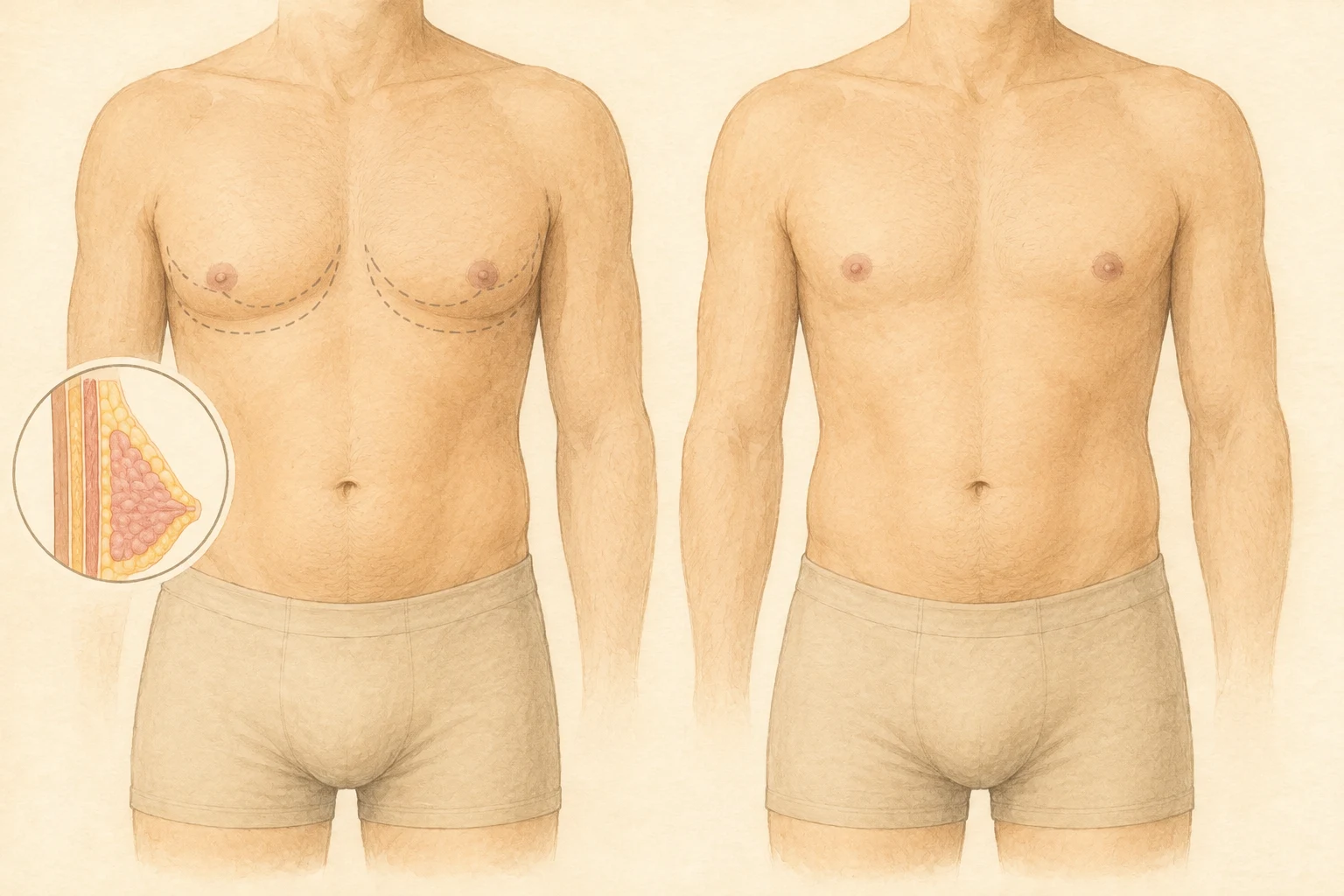
Swelling after liposuction is part of the healing process
Swelling after liposuction can look uneven, feel firm and change several times during the day. That does not automatically mean the procedure failed or that a complication is developing. The tissues have been operated on, small blood vessels and lymphatic channels need time to settle, and the body is repairing the treated areas. Bruising, tenderness, numbness, temporary hardness and a tight feeling can accompany the swelling.
The important question is not whether you have any swelling after liposuction. It is whether the pattern is consistent with your surgeon’s instructions and whether it is improving overall. A safe recovery plan includes a way to contact the clinical team, scheduled reviews and clear instructions for garments, walking, medication, washing and massage. Online comparisons with another patient’s day-by-day photographs are not a diagnosis.
What can be expected early on?
Swelling is often most noticeable in the first days and may appear worse after standing, walking or being upright for longer. One side may settle faster than the other because treatment areas, sleeping position, fluid movement and the amount of tissue response are not identical. Bruising may change colour as it resolves. Some areas can feel numb, tingly, lumpy or firm before sensation and softness gradually return.
The final contour cannot be judged while the body is acutely swollen. A compression garment may be recommended to support the treated areas, but the fit and schedule must be appropriate. A garment that is too tight, rolled or rubbing can injure the skin and does not make healing faster. Follow the surgeon’s instructions rather than adding layers or tightening straps because the first result looks uneven.
Why swelling can fluctuate
Gravity and activity
Fluid can collect differently when you spend more time sitting or standing. A long car journey, airport transfer or busy day may make swelling more noticeable later. Gentle walking may be encouraged to support circulation, but overactivity can increase pain and swelling. Rest with the positioning recommended by the team and build activity gradually.
Different treatment areas
Abdomen, flanks, back, thighs and arms can respond differently. A 360-degree plan is not a single identical wound; each area has its own tissue thickness, pressure points and movement patterns. Ask whether the garment covers every treated zone correctly and whether one-sided swelling is expected for your particular plan.
Normal firmness versus a fluid collection
Firmness can be part of healing, but a new soft or tense pocket, a rapidly increasing area, a marked change in shape or fluid leaking from an incision needs clinical advice. A seroma, haematoma or infection cannot be diagnosed safely from touch alone. Do not repeatedly press, puncture or massage a lump to make it disappear.
Compression, walking and massage
Use a compression garment only as prescribed. It should feel supportive without causing severe pressure, cold or discoloured skin, increasing numbness, breathing difficulty or deep grooves. Remove it or adjust it only according to the team’s instructions so that you can inspect the skin and keep dressings clean. If it does not fit, ask for a review rather than buying a smaller size.
Short walks may be part of a clot-prevention and mobility plan, but they do not mean you are ready for exercise, lifting or long sightseeing days. Avoid driving until your surgeon and insurer agree that you can control the vehicle and react safely. Keep luggage light and arrange help, especially if you are travelling after surgery.
Lymphatic or post-operative massage is not automatically suitable for every patient or every stage. Ask who should perform it, when it can begin, what pressure is appropriate and whether there are areas to avoid. Forceful massage over a healing incision, collection or painful area can make matters worse. Never treat massage as a substitute for an examination.
When swelling needs prompt medical review
Contact the clinical team promptly if swelling is rapidly increasing, strongly one-sided, tense, associated with worsening pain or accompanied by a new fluid leak. Fever, spreading redness, warmth, foul-smelling drainage, wound separation or feeling increasingly unwell can indicate infection or a wound problem. Heavy bleeding or a sudden change in the treated area also needs urgent advice.
New one-sided calf pain or swelling, sudden breathlessness, chest pain, coughing blood, fainting or severe dizziness are emergency symptoms. Seek local emergency care immediately and explain that you recently had liposuction. Do not wait for a remote clinic to reply before treating a possible blood clot or serious complication.
What international patients should plan
Before leaving for surgery, ask how many in-person reviews are planned, who will assess swelling and where you should go if you remain in Turkey after the original itinerary. Confirm how the clinic handles an unexpected collection, wound problem or delayed flight. Keep discharge papers, medication, garment instructions and an emergency contact in your hand luggage.
Do not book a holiday around the operation. Sun, alcohol, swimming, long walks and fixed travel dates can conflict with recovery. The safest schedule leaves room for clinical review and a slower day. After returning home, identify a local healthcare option and agree how photographs or test results will be shared with the operating team.
Questions to ask about your swelling
- Which areas should be swollen after my exact liposuction plan?
- What degree of asymmetry is expected, and when should it improve?
- How should the garment fit and how often should I inspect my skin?
- When may walking, driving, massage and exercise progress?
- What does a seroma or haematoma feel like, and who reviews it?
- Which symptoms require an urgent local assessment?
- Who will follow me after I return home?
Recovery after liposuction is measured in trends, not a single morning in the mirror. Swelling and firmness may take time to settle, but a worsening pattern, severe pain or systemic symptom deserves review. Follow the plan given by the surgeon who performed the procedure and ask early when something does not look or feel right.
For general procedure context, read the liposuction operation page and the compression garment guide. General information cannot replace an examination of your treated areas.