Why compression garments are part of some recovery plans
A compression garment after tummy tuck may be recommended to support the abdomen while swelling settles and the tissues heal. After liposuction, an arm lift or a thigh lift, the garment may be shaped differently and may serve a different practical purpose. It is not a universal medical prescription, and tighter is not automatically better. The correct garment, pressure, wearing schedule and duration should come from the surgeon who knows what was done.
Patients often search for a compression garment after liposuction and assume that any online abdominal binder will be suitable. That can create problems: seams can rub an incision, a rolled edge can concentrate pressure, and a garment that is too small can make breathing, walking or skin checks harder. Think of compression as one part of aftercare, alongside wound care, movement, medication and follow-up.
Compression is not the same for every operation
Tummy tuck
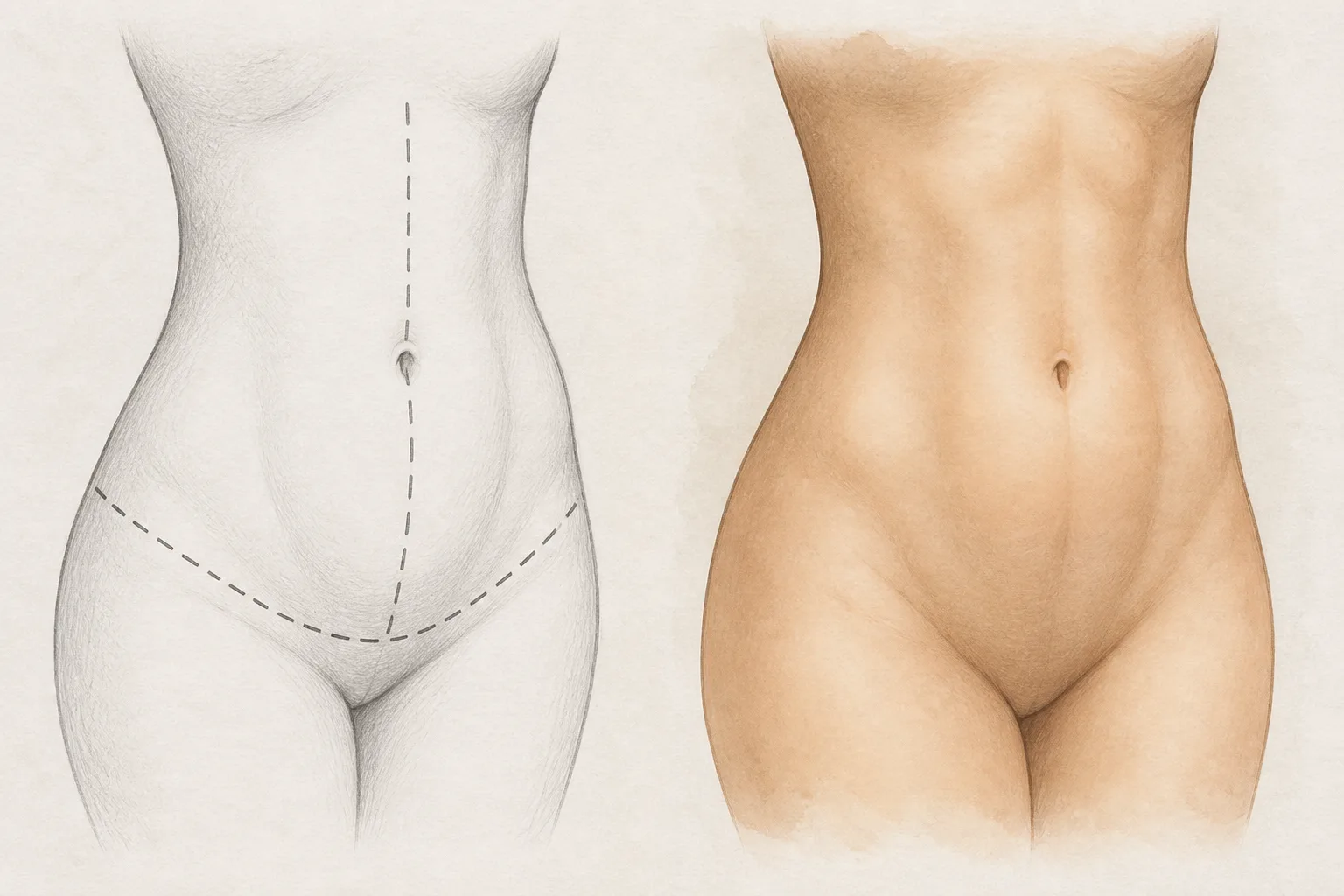
After abdominoplasty, the garment may cover the abdomen and sometimes the flanks. The incision, navel, drains and areas of muscle repair all affect how it should sit. A surgeon may prefer a specific binder, a full garment with an opening or no compression over a particular area during the earliest stage. Do not improvise around drains or dressings.
Liposuction
After liposuction, compression may be used over the treated zones to manage swelling and support the contour while the body heals. The required shape depends on whether the abdomen, waist, back, thighs, arms or several areas were treated. A garment designed for one area may bunch over another. Ask whether the garment should have zips, openings or adjustable panels.
Arm or thigh lift
Arm and thigh-lift garments must protect a long incision without creating friction in the armpit or groin. Walking, toileting, sitting and bathing can all become awkward when a garment is difficult to remove. The practical design matters as much as the label. Your team should show you how to put it on without pulling across the incision.
What a safe fit should feel like
A prescribed garment should feel supportive and evenly snug, not like a tourniquet. You should be able to breathe comfortably, change position and follow your walking instructions. The skin should not become persistently pale, blue, cold, numb or increasingly painful. Watch for deep grooves, blisters, broken skin or a seam that repeatedly rubs the same point.
Swelling can change during the day, so a garment that felt acceptable in the morning may become uncomfortable later. Ask whether you may loosen or remove it temporarily for inspection and washing. Do not cut or alter the garment near an incision unless the team has approved the change. If it rolls or folds, contact the clinic; repeated folding can create concentrated pressure.
How to use the garment in daily life
Follow the written schedule
Some surgeons prescribe near-continuous wear with short breaks for washing and skin checks; others use a different schedule. The recommendation may change as swelling improves. Do not compare your timetable with a social-media post or another patient’s instructions. The operation, technique, skin condition and wound status all matter.
Inspect the skin
Check the skin every day in good light, including the edges of the garment and the areas around drains or dressings. Look for increased redness, moisture, pressure marks that do not fade, blisters, discharge or a new painful area. Use only approved dressings or products under the garment. Creams, oils and fragranced products can irritate healing skin or make the garment slide.
Keep it clean and dry
Ask how to wash the garment and how many spare garments you need. A damp garment can irritate the skin, and washing instructions vary by fabric. Plan a safe way to shower and change without standing unsupported. International patients should bring the clinic’s instructions home and confirm where to buy an appropriate replacement if the garment is damaged.
Do not let it replace movement
Compression does not make prolonged bed rest safe. Follow the surgeon’s instructions for short walks, ankle movement and rest. Do not wear the garment as permission to exercise, lift children or carry luggage before you are cleared. Conversely, do not remove it for a long outing because it feels inconvenient without asking the clinical team.
Pressure that is too high can be a problem
A garment can cause harm when it is too tight, badly positioned or worn over a complication. Increasing pain, shortness of breath, new numbness, cold skin, colour change, severe pressure marks or difficulty passing urine should not be ignored. Remove or loosen it only as your clinical instructions allow and contact the surgeon promptly for specific advice. Seek urgent care for breathing difficulty, fainting, severe chest pain or rapidly worsening swelling.
Compression also cannot prevent a seroma, haematoma, infection or blood clot on its own. A new pocket of fluid, rapidly expanding asymmetry, fever, spreading redness, foul drainage or severe one-sided leg swelling needs medical review. Do not tighten the garment to hide a change in shape.
What to ask before travelling for surgery
- Which garment is appropriate for my exact operation and treated areas?
- When should I put it on, and how long should I wear it each day?
- How do I position it around drains, dressings and the incision?
- How should I check my skin and which marks are concerning?
- Can I loosen or remove it for showering, sleep, flights or skin checks?
- Where can I obtain a replacement if I am staying abroad or travelling home?
- What symptoms mean I should stop and contact the team?
The best compression garment after body contouring is not the tightest one; it is the one that fits the operation and can be used safely as the body changes. Keep the written instructions with your discharge papers, attend scheduled reviews and ask before changing the garment or wearing it for longer than advised.
For a broader recovery overview, read the tummy tuck recovery guide and the ASPS tummy tuck recovery guidance. General guidance does not replace instructions from your own surgeon.