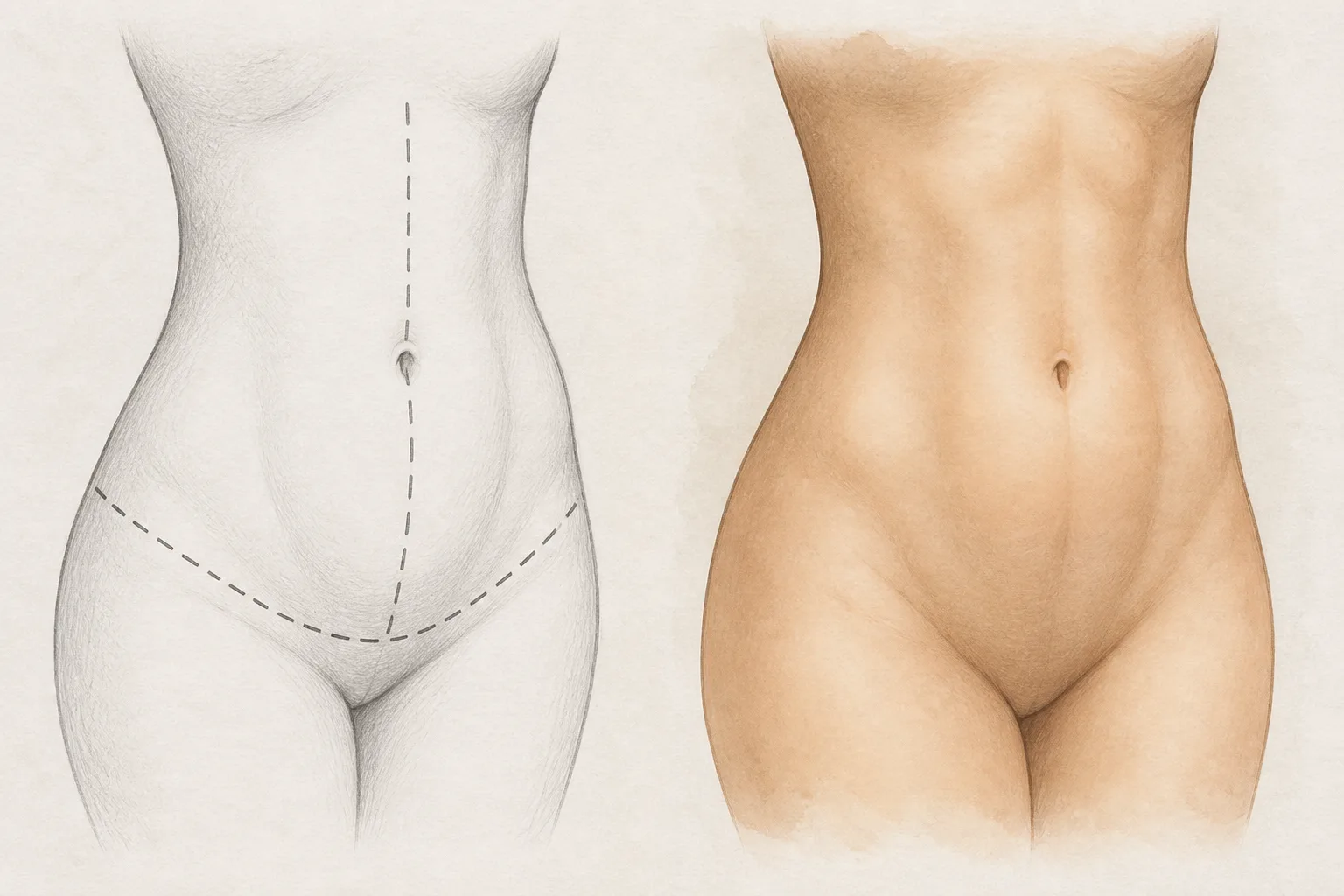
Flying after a tummy tuck is a medical planning question
If you are considering flying after tummy tuck surgery, do not treat the return flight as a routine travel detail. Abdominoplasty is a major operation, and the early recovery period can involve reduced mobility, swelling, pain, a tight abdominal feeling, dressings, drains and medication. Air travel adds prolonged sitting and distance from the operating team. Your departure date should be based on your clinical condition and the surgeon’s written clearance, not only on the date printed on a package itinerary.
Patients travelling for surgery should plan the journey home before booking the operation. The question is not simply “when can I fly after abdominoplasty?” It is whether your wounds, mobility, pain control, swelling and general health make the journey reasonable, and what support is available if a problem develops after you leave Turkey. The tummy tuck recovery guide explains the wider recovery process; this article focuses on the travel decision.
Why the flight can add risk
After an operation, you may spend more time resting and may not walk normally. A flight adds a period of sitting in a confined space, often with limited leg movement. Surgery and air travel can both increase the risk of a blood clot in the deep veins of the leg. A clot can sometimes travel to the lungs, so a small concern should not be dismissed as ordinary post-operative discomfort.
Your personal risk depends on more than the tummy tuck itself. Previous clots, a family history of clotting, smoking, obesity, hormone medication, limited mobility, long flight duration and other medical conditions may change the recommendation. Tell the surgeon about all medicines, including contraceptives, hormone replacement, aspirin and supplements. Never start or stop an anticoagulant or compression stocking without a clinician’s instruction.
The NHS advises patients to plan aftercare carefully when having cosmetic surgery abroad and gives general minimum intervals for flying after different procedures. Those intervals are not a personal clearance and do not replace the operating surgeon’s assessment. A longer delay may be appropriate when recovery is slow or individual clot risk is higher.
When might a surgeon approve the journey?
There is no single safe flight date for every patient. Before approval, the clinical team may consider whether the incision is satisfactory, whether drains have been removed or can be safely managed, how much swelling is present, whether you can walk to the bathroom, whether you can control pain with the prescribed plan and whether there are signs of bleeding, infection or fluid collection.
An in-person review close to departure is especially important for international patients. Ask exactly who will examine you, when that review will happen and what would cause the team to postpone your flight. A surgeon should be able to explain the decision in relation to your operation rather than offering a universal promise to every patient.
Keep enough flexibility to stay longer if the team recommends it. A change fee or an extra hotel night is frustrating, but forcing a flight because a non-refundable ticket is approaching can create a poor clinical choice. Ask before surgery how additional accommodation, reviews, medication and transfers are handled if your recovery needs more time.
How to prepare for the journey
Plan movement without overexertion
Ask the surgeon when and how often you should walk during the airport process and flight. You may need to stand or walk at appropriate intervals, move your ankles while seated and avoid remaining in one position for the entire journey. Do not turn this into a fitness challenge: short, supported movement is different from carrying luggage, rushing through a terminal or walking long distances for sightseeing.
Arrange assistance
Request airport wheelchair or buggy assistance if walking long distances is difficult. Assistance is not an admission that something has gone wrong; it can help you conserve energy and avoid lifting. Tell the airline about recent surgery if its medical clearance or fit-to-fly process requires documentation. Choose an aisle seat if the clinical team agrees it is practical, and make sure you can reach the toilet without twisting or climbing over another passenger.
Keep medical essentials in your hand luggage
Carry your discharge summary, operation details, medication list, prescriptions, surgeon’s contact information and travel-insurance documents in your cabin bag. Keep medication in its original packaging and follow the prescribed timing. Do not place essential documents, dressings or medicine in checked luggage. If a drain remains in place, carry the written drain-care plan and enough approved supplies for the journey.
Protect the incision and respect lifting limits
Do not lift a suitcase into an overhead locker. Arrange help with every bag, taxi transfer and hotel check-in. Wear loose clothing that does not rub the incision or press unpredictably on a drain. If a compression garment has been prescribed, ask whether to wear it during the flight and how to check the skin beneath it. The right garment should support recovery without causing numbness, sharp pain, cold skin or difficulty breathing.
What to ask about medication and clot prevention
Some patients receive a plan involving early walking, anti-embolism stockings or prescribed medication to reduce clot risk. The plan depends on your history and the operation; it is not safe to copy another patient’s injections or medication schedule. Ask who administers any injection, when it should be taken and what to do if a flight is delayed.
Hydration and movement can support a sensible travel plan, but drinking water is not a guarantee against a clot. Avoid alcohol, which can worsen dehydration and interact with medicines. Do not take sedatives simply to sleep through the flight unless your own doctor has approved them. You need to remain able to notice symptoms and move as instructed.
Warning signs during or after travel
New one-sided calf pain or swelling, unexplained warmth or redness in one leg, sudden breathlessness, chest pain, coughing blood, fainting or severe dizziness require urgent medical assessment. Do not wait for a message from the overseas clinic if emergency symptoms appear. Call local emergency services, tell clinicians that you recently had major surgery and then notify the operating team when it is safe.
Increasing abdominal pain, heavy bleeding, rapidly worsening swelling, fever, spreading redness, foul drainage or wound separation also needs prompt contact with the clinical team. A small amount of discomfort after travel may be expected, but a sudden change or a symptom that is getting worse deserves advice.
Questions to ask before booking your flight
- What findings must be present before you clear me to fly?
- When is my final in-person review before departure?
- What happens if my wound, drain or mobility is not ready on the planned date?
- Do I need airline medical clearance or a fit-to-fly letter?
- How should I move during the airport journey and flight?
- Should I use a prescribed garment, stockings or medication while travelling?
- Who will respond if I develop a concern after landing?
Flying after a tummy tuck should be the final step of a recovery plan, not the first fixed appointment. Build in time for review, support and a possible change of itinerary. A careful travel plan gives your clinical team room to prioritise healing and gives you a safer way to return home.
For general recovery questions, read the ASPS tummy tuck recovery information and the NHS guidance on cosmetic surgery abroad. These resources cannot replace personalised clearance from the surgeon treating you.