Start with assessment, not a cosmetic label
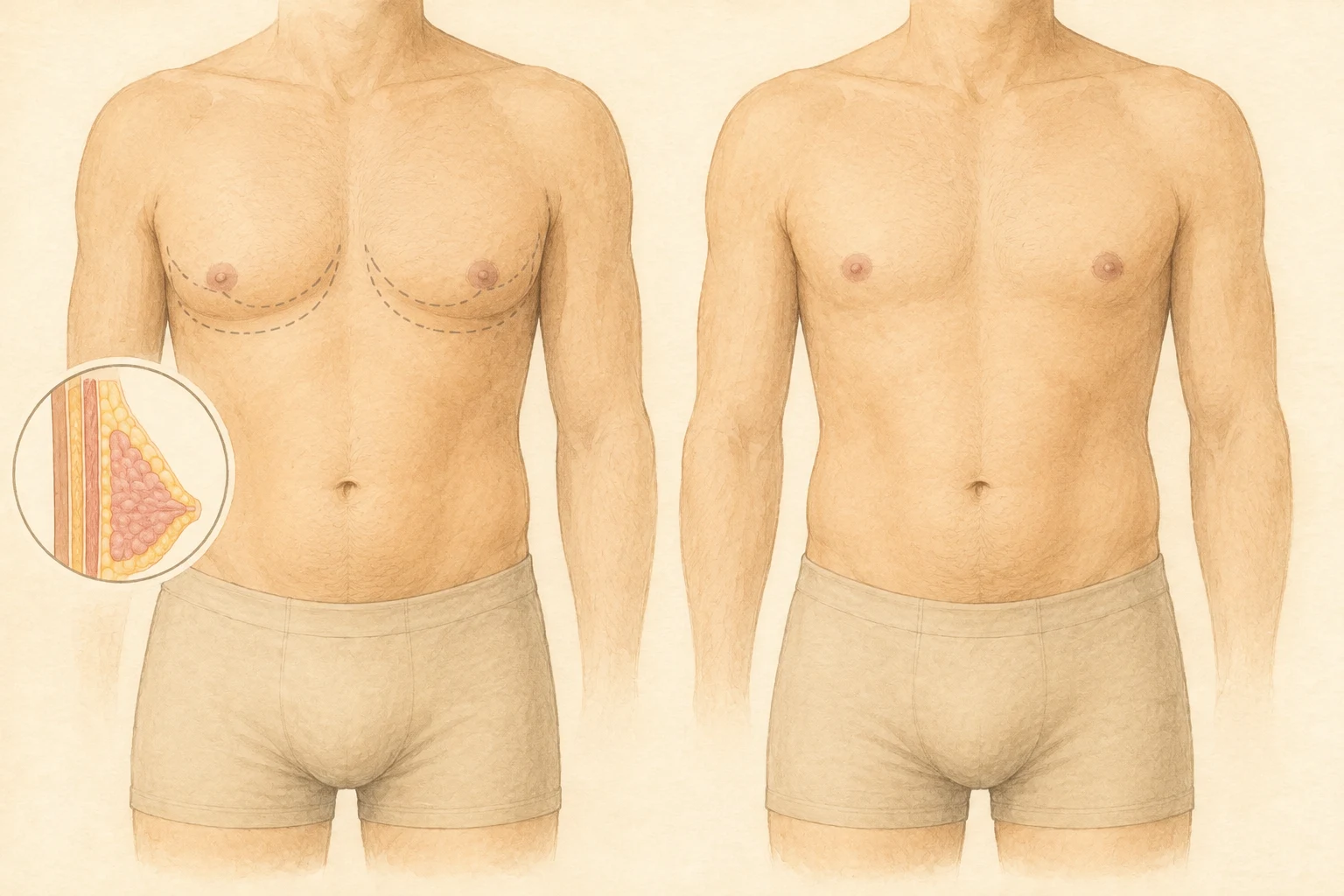
This gynecomastia surgery guide starts with the cause of chest enlargement. Gynecomastia is enlargement of male breast tissue and can affect one or both sides. Hormonal changes, medications, anabolic steroids, weight change and conditions involving the thyroid, kidneys or liver can play a role. Surgery may be appropriate for some patients, but a new, painful, one-sided lump, nipple discharge, skin change or persistent tenderness deserves medical assessment first.
It is also important to distinguish glandular tissue, fat and loose skin. Liposuction may reduce fatty tissue, while firm gland beneath the nipple may require excision; significant loose skin may need a different approach. The gynecomastia surgery in Turkey operation page describes the treatment pathway, while this article focuses on assessment, recovery and practical planning.
What should happen before cosmetic surgery?
Tell the clinician when the enlargement began, whether it is changing, whether you have pain or discharge, what medication and supplements you take, whether you use steroids or recreational drugs, and whether you have had major weight change. A physical examination helps determine the tissue involved and whether further investigation is appropriate.
Do not stop prescribed medication without medical advice. Smoking, uncontrolled medical conditions, poor nutrition and unstable weight can affect healing. Ask what tests are needed, when weight should be stable and what alternatives exist if the cause can be treated without surgery.
Recovery after gynecomastia surgery
Recovery depends on whether treatment involves liposuction, gland excision, skin removal or a combination. Dressings, compression, swelling, bruising, temporary numbness and tenderness are common themes. Some patients have drains, particularly when more tissue or skin is removed. Ask how to shower, sleep, care for incisions and recognise fluid collection.
A compression vest may support the healing chest and help the skin settle, but it should not cause pressure sores, breathing difficulty or severe discomfort. Ask how long to wear it, how to wash it and what to do if the fit changes. Early chest shape is obscured by swelling, so do not judge the final result immediately.
Returning to work and the gym
Desk work may be possible sooner than manual work, but the procedure matters. The ASPS notes that a simpler operation may allow an earlier return, while gland removal or larger skin excision can require more time. Driving should wait until you can control the vehicle safely and are not impaired by pain medication.
Strenuous exercise and anything that raises pressure or pulls on the chest should be restricted initially. Lower-body activity may return before chest and upper-body training, but the exact stages should be approved by your surgeon. Start with the plan, not with the weight you lifted before surgery.
Chest shape, scars and sensation
Incisions may be placed around the edge of the areola or elsewhere depending on the treatment. Scars can be firm, red or sensitive while they mature. Nipple and skin sensation can change temporarily or, less commonly, persistently. Ask how the surgeon manages asymmetry, excess skin, contour irregularity and the possibility of revision.
Seroma, a fluid collection, can occur after chest surgery. A new soft swelling, increasing asymmetry or worsening discomfort should be reported. Do not drain, massage or compress a suspicious area more tightly without clinical advice.
Travel after male breast reduction
Before leaving Turkey, arrange a review of wounds, swelling, pain control, mobility and garment fit. The NHS recommends planning aftercare and complications carefully when having cosmetic surgery abroad, and major surgery plus air travel can increase clot risk. Use luggage assistance and keep medication, the operative report and emergency contacts in your hand luggage.
Ask how concerns will be handled after you return. A clear plan may include photographs for a routine question, a local examination for a wound issue or urgent care for serious symptoms. Do not rely on a coordinator to diagnose chest pain, breathlessness or rapidly worsening swelling online.
Protect the result after recovery
Once cleared, gradual training and stable weight are more useful than aggressive attempts to reshape the chest. Weight gain can add fat to the area, while hormones, medicines or anabolic steroid use can contribute to recurrent enlargement. Tell your clinician about any new medication or supplement rather than assuming the change is purely cosmetic.
Keep the pre-operative assessment and operative report with your health records. If asymmetry, a new lump, persistent pain, nipple discharge or skin change develops later, seek medical review rather than assuming it is a normal surgical result. Surgery can improve contour, but it does not remove the need to pay attention to future chest health.
Ask how the tissue will be assessed
If glandular tissue is removed, ask what the clinic’s usual process is for documenting and handling it. The answer depends on local practice and the clinical findings, but knowing the process before surgery avoids confusion later. Ask how the surgeon will address a residual puffy nipple, loose skin or asymmetry if those issues are present before the operation.
Also discuss what success means to you: a flatter chest, improved symmetry, less tenderness, better clothing fit or a specific athletic contour. A clear goal helps the surgeon explain what liposuction, excision or skin removal can and cannot achieve. It also makes the post-operative result easier to judge fairly.
Finally, ask how the team will document the pre-operative chest shape and what follow-up photographs, examination or measurements are useful. A calm comparison at the appropriate review is more reliable than checking the mirror repeatedly during the first swollen days.
When to seek help
Fever, spreading redness, foul drainage, wound separation, significant bleeding, rapidly increasing swelling or severe pain need prompt clinical advice. Chest pain, breathlessness, fainting or new one-sided leg swelling require urgent local assessment.
Questions to ask
- Is the enlargement gland, fat, loose skin or a combination?
- Do I need medical assessment or tests before cosmetic treatment?
- Will I need liposuction, gland excision, skin removal or drains?
- How long will I wear the compression vest and when can I train?
- What are the plans for asymmetry, seroma, numbness or revision?
For independent information, read the NHS gynaecomastia guidance and the ASPS gynecomastia surgery overview. This article cannot diagnose chest enlargement or replace an examination.